


ACRI Opposes Using Classified Shin Bet Materials to Disqualify Political Parties: Q&A
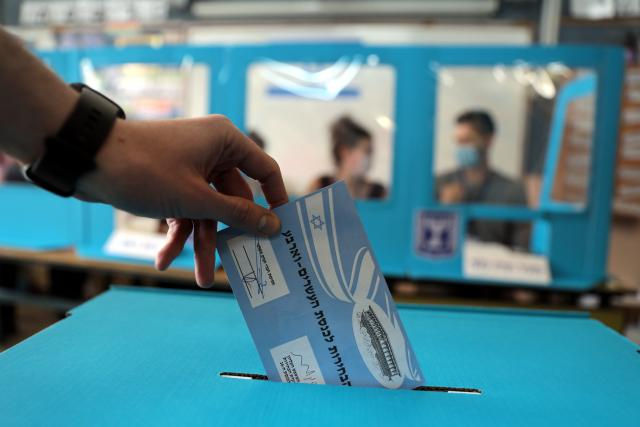
On July 5, 2026, the Supreme Court, sitting as an expanded panel of five justices, will convene to hear a request by the Registrar of Political Parties to approve its decision refusing to register a new far-right political party, “The Complete and Strong Jewish Israel,” on the grounds that it is a successor to Rabbi Meir Kahane’s banned Kach party. The Registrar’s decision was based primarily on classified information provided by the Shin Bet (Israel’s internal security service). ACRI has sought to join the proceedings as a friend of the court (amicus curiae) and present its position opposing the use of classified Shin Bet materials to disqualify political parties.
What is ACRI asking the Court to do?
ACRI is asking the Court not to endorse the disqualification of a political party on the basis of classified Shin Bet materials. If the State claims that a party is racist, a successor to Kach, supports a terrorist organization, or serves as a front for unlawful activity, it must present open, concrete, and sufficient evidence to support those claims.
ACRI is not seeking to express a position on the party itself or on whether it is eligible to be registered. It is asking the Court to establish a clear rule: the disqualification of political parties and candidates, if it is to occur at all, must be based solely on an open and unequivocal evidentiary foundation that allows for public scrutiny, meaningful judicial review, and a genuine opportunity for the party to mount a defense.
Why is it dangerous to involve the Shin Bet in a political issue?
The Shin Bet is a security agency with broad powers that is subordinate to the government, and the Prime Minister serves as the minister responsible for the organization. The Shin Bet has been granted exceptional powers when it comes to surveillance and investigation, as well as in gathering information and collecting intelligence for the purpose of carrying out its mission to avert serious threats to state security and to the foundations of the democratic system. It is not a political body, it is not an electoral body, and it is not supposed to determine legitimacy in the political arena.
Once a classified Shin Bet opinion becomes central evidence in proceedings to disqualify a political party, it sets a dangerous precedent. A secret security organization, one which is subordinate to the Prime Minister, gains influence over determining the boundaries of participation in the political system, based on information that is not available to the public, to the party itself, or largely to judicial scrutiny. This would constitute a profound change, one that would weaken democracy.
The concern is not limited to this specific case, but to the precedent it could create. If it is established that a political party may be barred from participating in elections on the basis of classified Shin Bet materials, it will be difficult to draw a clear line limiting the future use of this tool. Different governments may be tempted to rely on classified security assessments in cases involving sharp political or ideological disagreements with the party in question, rather than a clear and concrete security threat.
In a democratic state, political parties are disqualified—if they are disqualified at all—on the basis of open legal evidence that can be examined, challenged, and subjected to public and judicial scrutiny, not on the basis of secret intelligence assessments produced by a security agency. The greater the reliance on classified intelligence materials from a group that is subordinate to the government, the greater the risk of blurring the boundary between protecting national security and allowing the executive branch to influence the rules of democratic competition.
This concern is heightened by the growing efforts in recent years to expand the Shin Bet's involvement in civilian matters, such as authorizing it to track the contacts of individuals diagnosed with COVID-19 during the pandemic and attempts to involve it in addressing crime in Arab society. In recent years, there have also been increasing attempts to exert political influence over the Shin Bet and to make political use of its capabilities and tools. For example, it was reported that former Shin Bet Director Ronen Bar refused a request by Prime Minister Benjamin Netanyahu to use Shin Bet tools against political rivals. There were also reports of Shin Bet involvement in monitoring activists protesting the judicial overhaul and conducting “warning conversations” with activists.
With the installment of the new director of the Shin Bet, David Zini, concerns regarding the Shin Bet’s involvement in ideological issues and its alignment with the needs of the governing party have only intensified. For example, the Shin Bet reportedly reversed its longstanding opposition to the death penalty and instead adopted the government's position; it also newly ceased recommending the use of administrative detention orders against Jewish suspects. It has also been reported that Director Zini does not characterize attacks against Palestinians in the West Bank as Jewish terrorism, warned of an alleged “Arab takeover” of the city of Eilat, and silenced Shin Bet professionals who opposed proposed legislation that would require the Attorney General to undergo polygraph examinations.
What is the problem with the use of classified materials?
The use of classified materials in legal proceedings undermines the right to fair process. Every person, including those whom the state seeks to bar from organizing as a political party, has the right to know exactly what allegations are being made against them, to examine the sources of those allegations, and to respond to them.
In cases involving clear national security concerns, courts sometimes recognize the need to rely on classified materials. But disqualifying a political party is a decision that concerns the ability to participate in the democratic process. In that context, an especially high standard of openness, transparency, and procedural fairness is required.
Why is this especially concerning for Arab society?
Today, the case is about a far-right political party. Tomorrow, the same tool could be used against Arab parties and candidates.
This is not a theoretical concern. The history of disqualifying candidates in Israel demonstrates that it has repeatedly been used against representatives of Arab society: Arab candidates, Arab party lists, those who challenge the Jewish-Zionist consensus, or anyone whose position the political majority seeks to portray as a “security threat.” When a classified Shin Bet opinion is added to the equation, the danger becomes even greater: it becomes much easier to label the political activity of a minority group as a security concern, and much harder to defend against that characterization. Accepting the disqualification of a far-right party on the basis of a Shin Bet opinion based on classified information could set a precedent that would treat Arab candidates and the political activity of Arab society as security threats, rather than as expressions of legitimate political views.
This is why the current proceedings are so troubling, and why even those who strongly oppose a far-right party should be cautious about legitimizing this tool. A precedent established against a far-right party could quickly become a mechanism for silencing minorities.
Is ACRI defending a racist far-right political party?
No. ACRI has spent many years fighting racism, incitement, discrimination, and political violence. We are categorically not in favor of racism, Kahanism, or Jewish supremacy. Racist political parties can and should be challenged and disqualified through public, educational, legal, and political means.
Our position in this case is not a defense of any particular party. Rather, it is an objection to the use of a dangerous tool: the disqualification of a political party on the basis of a secret Shin Bet opinion and classified materials that neither the public nor the party—and, in many cases, not even the courts—can meaningfully examine.
But if the party is a Kahanist party or one that incites terrorism, why not disqualify it?
A democratic state should not tolerate racism, incitement to racism, or support for violence and terrorism. The question is what the appropriate tool is for addressing these problems.
About four decades ago the Knesset enacted Section 7A of Basic Law: The Knesset. This established a system for disqualifying party lists and candidates from running in Knesset elections. Since then, it has become clear that this system has not achieved its intended purpose. Instead of serving as a rare measure taken against those seeking to undermine democracy, it has repeatedly become a political tool in attempts to exclude mainly Arab parties and candidates from participating in elections. In those cases, the Supreme Court overturned the Central Elections Committee’s disqualification decisions, finding that the exceptional conditions required to justify infringing on the rights to vote and to be elected had not been met.
When there is a genuine suspicion of incitement to racism, support for a terrorist organization, or other criminal offenses, the proper way to address it is through ordinary criminal enforcement: investigation, evidence-gathering, fair legal proceedings, and conviction by a court of law. This system operates on a foundation of evidence, procedural safeguards, and judicial oversight, and does not leave decisions to politicians with conflicts of interest.
Preventing the registration of a political party or disqualifying a party list or candidate can be a serious infringement of the right to vote and be elected, as well as of the right of voters to political representation. It should therefore not be turned into a political tool. Instead, the normal legal systems should be the preferred method for dealing with criminal offenses and manifestations of racism and violence.
As long as a tool allowing for the disqualification of political parties or candidates, such as Section 7A, remains in place, it is essential that it be used only on the basis of open, clear, and concrete evidence. This could include the party’s official platform, publications, campaign materials, speeches, organizational activities, patterns of conduct, and demonstrable links to unlawful or racist activity. It should not be on the basis of classified assessments regarding alleged hidden intentions, or information that the affected party has no meaningful opportunity to challenge.
What are the precedents regarding the use of classified materials to disqualify political parties and candidates?
In 2003, in a case concerning the disqualification of the party Balad and MK Azmi Bishara, the Supreme Court needed to consider whether materials collected by the Shin Bet and other classified evidence could be relied upon in proceedings to disqualify a party list or candidate. The Court did not establish a binding rule on the issue. In that case, although classified materials were presented, the Court ultimately allowed Balad and Bishara to participate in the elections.
Some of the justices were prepared to treat classified materials as “administrative evidence” that could be reviewed by the Court, but they also acknowledged that the classified nature of the materials and the resulting inability to examine the source of the information or respond to it fully diminished their evidentiary weight.
At the time, Justice Dalia Dorner articulated a particularly important principled position: concealed views that are not expressed publicly and that can be proven only through classified materials cannot serve as a basis for disqualifying a candidate. In other words, the disqualification of a political party or candidate must be based on open political activity, public statements, actions, and evidence that can be examined and challenged, not on secret intelligence assessments.
I think that you are siding with the racist extremists, and I am appalled.
We are siding with democracy and human rights. One can firmly and unequivocally oppose racism while also opposing the idea that a secret security service should determine, through classified materials, who is permitted to run in elections. One can regard a particular party as dangerous and objectionable while still recognizing that the legal precedent created in this case could be even more dangerous.
In a democratic state, the disqualification of a political party should be rare, and a last resort. When political expression is at stake, the boundaries of freedom of expression should be expanded as far as possible. Democracy is tested not by its protection of popular views, but by its protection of the right to express views that may be difficult, upsetting, extreme, or offensive, as long as they do not cross the (high) legal threshold of incitement, racism, or concrete action against the foundations of democracy.
The struggle against racism must be conducted through democratic means: open evidence, fair procedures, public scrutiny, equality before the law, and broad protection for political expression. Otherwise, in the name of combating racism, we may legitimize a tool that will ultimately be used first and foremost against minorities and political opponents.
Bottom line: we are defending racism or Kahanism. We are defending the fundamental principle that the right to participate in elections must not be denied on the basis of classified Shin Bet intelligence materials that cannot be meaningfully examined or challenged.


