


Human Rights and Democracy Under the 25th Knesset and 37th Government
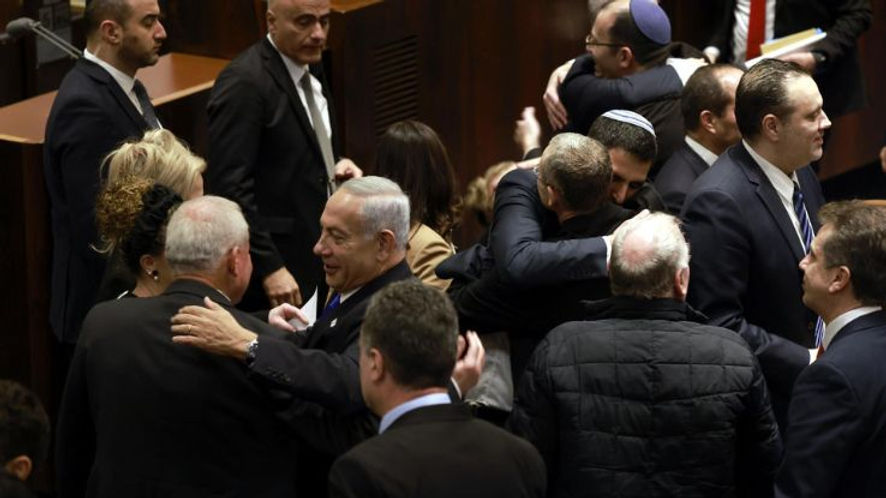
The terms of the 25th Knesset and the 37th government are coming to an end. In the shadow of October 7 and the subsequent war, their terms were marked by substantial declines in human rights and democracy. They included the humanitarian crisis in Gaza and the devastating impact on Israeli civilians, the prolonged captivity of the hostages, as well as the sharp rise in settler violence against Palestinians in the West Bank and the failure to enforce the law against the perpetrators. This government and Knesset were also responsible for the judicial overhaul, which included undermining the independence of the judiciary and civil service; attempts to restrict freedom of expression and protest; and violating the rights of already-vulnerable populations, including Arab society, detainees, and prisoners.
Below are summaries and reports of the deterioration in human rights resulting from the policies and actions of the outgoing government and Knesset.
Damage to the Justice System
The coalition's flagship project during the 25th Knesset’s term was the advancement of a judicial overhaul, centered on an ongoing effort to weaken the justice system and the rule of law. This included incitement against and delegitimization of the Supreme Court, the Attorney General, and other gatekeepers; disregard for court rulings and legal opinions; and the promotion of legislation intended to curtail the independence and authority of legal and legislative gatekeepers. Key measures included the abolition of the reasonableness standard, which was struck down by the Supreme Court; changes to the composition of the Judicial Selection Committee that increase political control over judicial appointments; changes to the method of appointing the Ombudsperson for Complaints Against Judges; the politicization of the Police Internal Investigations Department; and efforts to undermine the role of the Attorney General.
Two Separate Law Enforcement Systems
During the terms of the 25th Knesset and the 37th government, a separate law enforcement system for the Arab population increasingly took shape. While this was not a formal process, policies and legislation were advanced that in practice created distinctions between Arabs and Jews in Israel with respect to law enforcement, resulting in discriminatory enforcement against Arabs. This was carried out under the guise of combating terrorism or serious crime, which the government and the Knesset attributed exclusively to Arabs, and with deep involvement by the Minister of National Security in police and law enforcement policy.
Arab Society
Arab society was majorly impacted by the racist views and Jewish supremacist ideology that dominated the 25th Knesset and the 37th government. From the beginning, the government adopted a policy of discrimination and repression toward Arab society, which already suffers from longstanding discrimination and neglect. This policy was reflected from the outset in the government’s founding guidelines and subsequently in the numerous bills advanced by its members. It then became increasingly entrenched after the outbreak of the war on October 7, as incitement and persecution targeting Arab society intensified.
Negev Bedouins
Discriminatory and damaging policies aimed at the Bedouin population in the Negev continued and intensified, particularly with regard to land rights, planning, and settlement. A series of government decisions, policy measures, and actions on the ground violated the rights of Bedouin citizens and deepened their exclusion from public spaces. There was also an increase in rhetoric portraying Bedouins as a threat, and as people taking over State lands. This false narrative has provided legitimacy for harsher enforcement measures, home demolitions, and the displacement of communities.
Freedom of Expression and Protest
Freedom of expression and protest are essential for a democracy, and the destruction of democracy always involves restricting the freedom of expression of anyone who might criticize the government: the media, artists and cultural institutions, activists, protesters, and human rights organizations. During the terms of the 25th Knesset and the 37th government, the suppression of freedom of expression and attempts to silence government critics intensified. Even if not all initiatives to restrict freedom of expression ultimately came to fruition, the very declaration of an intention to advance them, along with incitement against government critics, creates a “chilling effect” of deterrence and self-censorship and delegitimizes all those who criticize the government.
The Rights of Prisoners and Prison Conditions
Over the four years in which the 25th Knesset and the 37th government were in office, the rights of prisoners and detainees in Israel Prison Service facilities underwent a dramatic and unprecedented regression. Conditions in detention facilities are nothing short of appalling. Prisoners and detainees are exposed to harsh conditions and violence, and are denied their most basic needs and rights. This is particularly true of security prisoners, but criminal prisoners are also subjected to many of these violations. The treatment of prisoners is an explicit policy, and after October 7 it appears that many in the government and the Knesset, the Israel Prison Service, the general public, and even groups responsible for law enforcement within the Ministry of Justice and the judicial system fell in line and supported the imposition of detention conditions amounting to cruel, inhuman, and degrading treatment.
The Occupied Territories
During the terms of the outgoing Knesset and government, there was a sharp and unprecedented deterioration in the state of human rights in the occupied territories, which deepened after October 7. The fighting in Gaza resulted in the widespread killing of civilians, massive destruction of homes and infrastructure, mass displacement, and a humanitarian crisis, alongside extensive restrictions on the entry of food, medical supplies, and aid, damage to the healthcare system, and an extreme deterioration in the conditions under which Palestinians are held in detention.
In the West Bank, the government accelerated measures aimed at establishing permanent Israeli control and creating a de facto annexation through the expansion of civilian and bureaucratic systems of control, extensive restrictions on movement, and the dispossession of Palestinians from their land and homes. This was accompanied by an unprecedented increase in settler violence, the resultant expulsion of communities, and a deepening economic crisis in the West Bank.
In East Jerusalem, measures to take control of land and homes, displace communities, and demolish homes expanded, together with ongoing discrimination in planning, infrastructure, and services. Taken together, these policies reflect a shift from deepening the existing occupation to accelerating processes of annexation, expulsion, and displacement of the Palestinian population, while significantly eroding the protections afforded to a population under occupation by human rights law and international law.


