Allow the Displaced to Return to Refugee Camps in the Northern West Bank

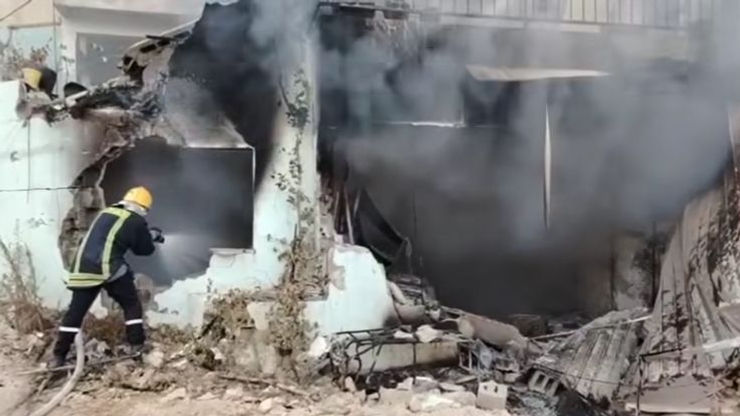
On September 11, 2025, the Association for Civil Rights in Israel filed a petition on behalf of the residents of the Jenin and Nur al-Shams refugee camps in the northern West Bank, who were evacuated from their homes as part of Operation Iron Wall. The petition states that tens of thousands of residents of the refugee camps, including children, women, and the elderly, were suddenly and forcibly evacuated from their homes in a manner that did not allow for any preparation or to collect basic necessities to take with them. They have still not been allowed to return to their homes, and many of them remain without shelter and without adequate humanitarian assistance. The petition argues that this is the largest wave of mass displacement in the West Bank since 1967, and that while the army denies the evacuation, it also does not allow the residents to return to their homes.
The petition is based on the provisions of international humanitarian law, particularly Article 49 of the Fourth Geneva Convention, which prohibits the forced displacement of civilian populations except in cases of absolute military necessity. When emergency situations do require a civilian population to be evacuated and displaced, steps must be taken to ensure that the evacuation is temporary, that citizens are sheltered, and that their essential needs are met. In this case, the continued prevention of residents' ability to return to their homes and the lack of humanitarian response to their needs constitute a violation of these provisions and of the fundamental rights of the protected residents.
ACRI requested that the Court order the State to stop preventing the return of the displaced to their homes and, until then, to immediately provide for the humanitarian needs of the tens of thousands who remain without shelter and without access to their homes and property, many of whom are also without a means of livelihood and without education and health services.
In the update notice filed in late August 2026, the State reported that there had been no material change in the security situation and that the operational conditions for the withdrawal of military forces from the camps had not yet been reached; consequently, security requirements did not allow for the return of the residents. The State’s response indicated that the military is preparing to maintain operational control within the camps over the long term, even after the conclusion of the current military activities. Nonetheless, the State argued that the military does not seek to remain permanent presence in the camps and that the measures it is taking are ultimately intended to facilitate the withdrawal of forces and the return of residents, though no timeline was provided.
The response also revealed that infrastructure rebuilding within the camps is barely progressing: the State confirmed that, due to ongoing military activity, no substantial repairs to damaged infrastructure within the camps have been carried out over the past four months.
In ACRI's response from September 2026, we argued that the update clarifies that the issue is no longer the evacuation of a population from an area of intense combat, but rather the prevention of the civilian population's return in order to maintain a long-term security arrangement and avert future threats. We argued that the need for continued military or diplomatic action to avert future risks, does not constitute a military necessity that would justify the evacuation of civilians. Additionally, data, testimonies, and images gathered by international and humanitarian organizations indicate that the displaced persons are suffering from severe economic hardships and their essential needs are not being met.
On October 11, 2026, the Court issued a decision ordering the State to provide a timetable for completing the measures required for the residents' return and to address the possibility of accelerating the process. The Court further ordered the State to address the humanitarian needs that ACRI pointed out are not being met.
HCJ 30662-09-25 Salama v. Commander of IDF Forces in the West Bank
Attorneys: Hila Sharon, Reut Shaer
ACRI's petition, September 11, 2025 (Heb)
For a full list of legal correspondence about this case, see here (Heb).
The petition was written with the assistance of field coordinator Muhannad Anati and legal intern Yaser Abu Areesha