"Thank you for preserving our values, for not allowing despair, anger, and the desire for revenge to take over"
June 23, 2026
Dear friend,
This weekend, the Israeli newspaper Calcalist featured an interview with ACRI’s Deputy Director, Attorney Gadeer Nicola. I am proud to share this interview with you, and to give you more insight into ACRI's amazing team and the Sisyphean work that they undertake every day. This interview will give you a behind-the-scenes look at the work ACRI does, and how we determine which cases to pursue when the government is inundating the system with bills that are often “absurd on an unbelievable level.” You can learn more about the Gadeer’s work on the petition against the Death Penalty Law and a petition against a law granting tax breaks tailor-made to strengthen the Jewish population of the city of Nof HaGalil. Gadeer also talks about growing up in Nazareth and the road to ACRI. And because the upcoming elections are on our minds, Gadeer also addresses the potential for voter suppression, and her thoughts on Arab turnout.

It is hard to forget the celebration held in the Knesset on March 30. Bottles of champagne were uncorked and members of Knesset embraced for long moments after the coalition succeeded in completing the passage of the Death Penalty for Terrorists Law. MK Limor Son Har-Melech, who was serving as Speaker of the Knesset at that moment, summed it up emotionally: “The people of Israel live,” unintentionally giving rise to a macabre double meaning.
Just a few minutes later, lawyers from the legal department of the Association for Civil Rights in Israel filed a petition to the Supreme Court demanding that the newly passed law be struck down. At the head of the team, which had worked around the clock in the days leading up to the vote in order to respond immediately, stands attorney Gadeer Nicola, who also serves as deputy director of ACRI.
Nicola (50) thought for a moment that filing the petition might allow her to rest a little during the Passover holiday, but she immediately realized that would not happen. Another bill passed that same day already affected her personally, and when Nicola learned about it, she understood at once that there would be no vacation for her. She arrived at her home in Nof HaGalil, took a deep breath, and began drafting the petition against the other law. She filed that petition the day after we met.
Unlike the Death Penalty Law, the other law Nicola is trying to overturn seems to be quite innocent. It is called the “Mixed Urban Settlement Encouragement Law,” and under the version approved by the Knesset (as a temporary provision until 2029), it grants a 12% tax benefit to residents of mixed urban localities in which between 35% and 55% of residents are not Jewish.
“What exactly bothered you about the law?”
“Originally, the Ministerial Committee for Legislation decided that for the purposes of this tax benefit, a ‘mixed city’ would be defined as a city in which the non-Jewish population stands at 40%. At present there is only one city in Israel that meets that condition: Nof HaGalil. This is a law tailored specifically for Nof HaGalil.
“I dove into the Knesset discussions, because during the Passover holiday I had so much free time to enjoy myself and enrich myself, and it was horrifying. Nof HaGalil does not meet the first criterion that qualifies localities for tax benefits, namely proximity to the border. And what was said in the committee discussions, completely openly, was that Nof HaGalil has a problem: the high percentage of Arab residents in the city. Heaven forbid, the city is falling! Arabs are described as a threat to be wary of, as though we are a spreading cancer that must be stopped. This is a discriminatory law that grants a significant public-funded benefit without equal criteria.”
This is not the first time benefits have been granted to localities the government wants to encourage.
“The purpose of these tax benefits is to attract a strong population, one that will contribute to the locality, to a weaker locality. It began with remote peripheral communities and border localities, because the security risk, together with the distance and peripheral nature of those places, drove people away. But around 20 years ago, thanks to petitions filed by organizations including ACRI, the Supreme Court issued a landmark ruling stating that clear and equal criteria must be established for the distribution of tax benefits, and that in cases in which the justification is socio-economic conditions or distance from the border, those criteria must be reflected in the Income Tax Ordinance itself.”
So how did the law pass?
“In the Finance Committee, the members of Knesset were forced to hear from the Tax Authority and Treasury officials that there is already a definition for a mixed city, and that the figure appearing in the bill creates the impression that this law is being tailored for only one city. But instead of backing down, what happened was that members of Knesset said, ‘Okay, we’ll make it 35%, and then it will apply to two localities: Nof HaGalil and Acre.’ Their problem was that Acre already receives a tax benefit, so what they did was slightly raise the maximum income ceiling for the tax benefit, so that Acre too would benefit from the law.”
Nicola stresses that the purpose of the law is not only to Judaize Nof HaGalil by encouraging a strong population (primarily Jewish) to live there, but also simultaneously to weaken the neighboring city of Nazareth. An example of this deliberate policy can also be seen in National Security Minister Itamar Ben Gvir’s decision last week to relocate the Northern District police headquarters from Nazareth to Nof HaGalil — a move expected to cost tens of millions of shekels and for which the minister has provided no substantive justification.
“For two decades now there has been negative migration from Nazareth, and many of its more affluent residents have moved to Nof HaGalil, thereby weakening [Nazereth],” says Nicola. “If there is any place that requires tax benefits in order to attract a strong population and preserve the strong population already there, it is Nazareth. In recent years the city has become a nightmare for its residents because it is extremely crowded, crime is rampant, and the number of murder victims there is second only to Lod. But instead they strengthen Nof HaGalil, draw Nazareth’s stronger residents there, and the damage to the city is enormous.”
“We Don’t Enjoy Public Sympathy”
In a fractured country like Israel, saturated with internal conflicts, the lawyers at ACRI have always had their hands full. But since the current government was formed, the pace of their work has become dizzying. “In the last two or three years,” says Nicola, “one of the main things we’ve had to deal with is setting priorities, given that the method of this government and coalition is a kind of ‘carpet bombing.’ An enormous number of bills are being introduced, most of them absurd on an unbelievable level. You have to keep track of them because you can’t be sure which ones will advance, and whether it’s worth investing time and resources in them, when we already know we’ll need to file petitions against those that do move forward.”
A glance at the list of petitions filed by ACRI gives a fairly good sense of the burden carried by the 15 lawyers who work with Nicola. No fewer than 116 petitions and various proceedings have been filed with the Supreme Court since the government was formed in December 2022 (28 were filed in 2023, 32 in 2024, 38 in 2025, and another 18 since the beginning of 2026). At the same time, dozens of appeals, petitions, and contempt-of-court motions were filed in lower courts.
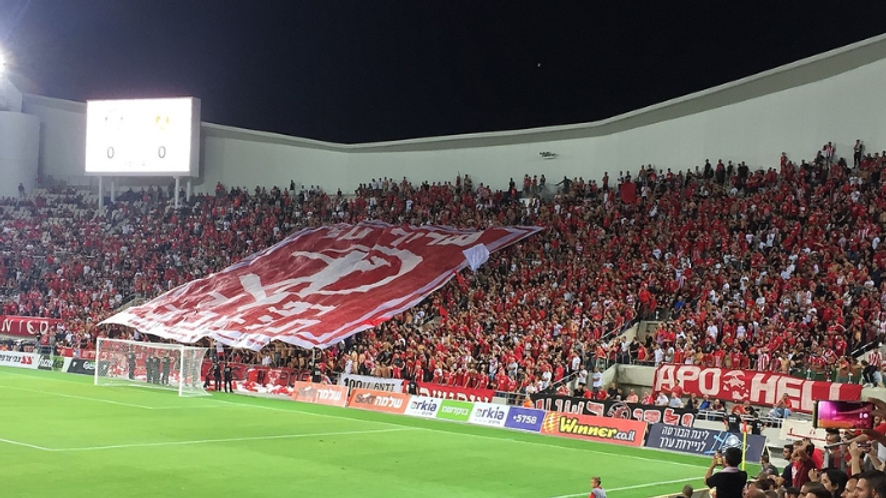
A very partial list: in January 2023, ACRI filed a petition demanding that Israel Railways be barred from preventing passengers wearing clothing with political messages from entering stations; in July of that year, it filed a petition against the mistreatment of demonstrators waving the Palestinian flag; a month later, ACRI joined the petition against abolishing the reasonableness clause; in September 2023, a petition was filed against the use by the police and the Shin Bet of spyware without authorization; in April 2024, ACRI petitioned the Prison Service demanding that security prisoners be provided with more food; in December of that year, a petition was filed demanding that asylum seekers be allowed to obtain driver’s licenses; and in December 2025, a petition was filed regarding the banning of Hapoel Tel Aviv fans from matches because they wore provocative shirts against the police and the minister responsible for them.
How do you decide what to prioritize?
“You can’t go after everything, so the first question we ask is whether the situation we’re acting against involves a violation of human rights. That’s our first filter. If there’s no such violation, there’s usually very little reason for us to intervene, even if the issue is politically important. Another consideration is the potential for progress. Recently, for example, because of the pressure, we decided not to intervene in certain legislation that was still at the preliminary reading stage, and instead to wait and see whether it would pass a first reading. That’s not ideal, because early intervention increases the chances of having an impact, but the sheer number of bills compared to our limited resources forces us to operate this way.
“You have to remember that our goal is protecting human rights, and filing petitions is only one tool toward that end. That’s why we try to be involved, as much as we can, during the legislative process. It’s very difficult, because in recent years many Knesset committees have become toxic spaces. Our lawyers have been attacked in hearings and not allowed to speak, so unfortunately the ability to work within the Knesset and influence things has been impaired. But we still do that work: we submit position papers regarding bills in order to draw lawmakers’ attention to substantive flaws and propose ways to correct them.”
Faced with a government charging ahead, does your work also produce victories?
“We have many positive outcomes, even if not everything can be defined as a victory. I’m uncomfortable with the word ‘victories,’ because the struggle is Sisyphean and we should be realistic about what we can achieve and what our actual strength is. Sometimes you come before the Supreme Court knowing you won’t succeed in convincing it to intervene to the extent you want it to, but along the way you achieve improvements on the ground. It doesn’t become ideal, but small gains are made that improve people’s lives, and that’s what gives us the strength to get up in the morning and do this work.”
A good example of the Sisyphean nature of the battles waged by ACRI can be seen in the apparent victory it achieved about two weeks ago, when the Supreme Court ordered the Minister of National Security to allow Red Cross representatives to visit security prisoners in Israeli prisons for the first time since October 7, 2023. The ruling came after the State spent more than two years dragging its feet, avoiding submitting a response to the petition, and repeatedly requesting extensions and postponements of hearings. “This singular conduct, within the framework of which the State was given countless opportunities to present its position, led to considerable prolongation of the proceedings,” Justice Daphne Barak-Erez wrote in the ruling. “Nevertheless, in the end we found ourselves standing before a broken trough. An orderly, reasoned, and detailed position on behalf of the State (…) — there is none.”
Do you think this ruling will be respected?
“There’s a chance we’ll have to go back to the Supreme Court with contempt motions.”
“You can assume you won’t win much public sympathy because of that ruling.”
“We don’t receive any sympathy at all. Not from the public and not from the court. Sometimes not even from our own supporters. But for an organization like ACRI, it’s clear that there are things — especially in difficult times — that we simply cannot give up on or bend over backward about, because if we do, nothing will remain here. I see this not only as a responsibility toward every individual, whoever they may be, in order to protect their rights, but toward Israeli society as a whole.”
Are you frustrated by how difficult it is to explain to most Israelis the importance you see in efforts like these?
“It’s very difficult, and that’s why the public awareness campaigns we wage are no less important than the legal campaigns. We see ourselves as a body that has a responsibility to explain, educate, raise awareness, and reflect the truth. And I can say that there has been positive development compared to the difficulty we saw during the initial period of the public’s confrontation with what we at ACRI were trying to promote. I meet people who in the past were angry at me — for example because we fought for freedom of expression following the persecution of people who posted things online in the months after October 7 — and today they tell me, ‘Thank you for preserving our values, for not allowing despair, anger, and the desire for revenge to take over.’ As far as I’m concerned, that is no small thing. That’s why we invest heavily in relations with the press, conferences, public outreach, and making use of every social media platform, even TikTok. We live in a world very different from the one that existed here 20 years ago, and we need to adapt ourselves to it.”
“The News in Hebrew Was a Terrible Thing”
Nicola lives with a partner who is also a lawyer, and the two have 17-year-old twin daughters. She grew up in Nazareth as the eldest of three siblings in a secular Christian family. Her mother was a clerk in the property tax authority and her father a renovation contractor.
“Until third grade we lived one floor below my grandparents, and then we moved to a house my father built in the village of Yafia near Nazareth, but I continued studying in the city,” she says. “In middle school I transferred to Al-Mutran School in Nazareth, which is a church school, but you could say I’ve always been an atheist. At home we didn’t go to church and we didn’t pray. The most we did was celebrate the two main holidays around the table.”
She describes the home she grew up in as highly politically aware and sensitive to injustice (her maternal aunt is Hadash MK Aida Touma-Sliman), and says she was always interested in human and civil rights:
“My mother is very political and outspoken, and my father is very sensitive to violations of rights and injustice, and I think I got my sensitivity to the issue from him. He experienced deprivation, and when he was in fourth grade they already sent him out to work, so there’s no need to explain to him the hardships people experience in life.
“It was important to my parents that we get an education in order to give us a better future. They didn’t push us toward political involvement, maybe even the opposite, but the political awareness was always there. One of the terrible things that was customary in our house — and still happens today — was that every evening they would watch the news in Hebrew, and afterward we would talk about what we had seen.”
Why terrible?
“From my parents’ perspective, watching the news was also part of learning the Hebrew language. But watching it was torture, because very often the truth is very far from what is reported. We would listen and argue among ourselves about what appeared on the news.”
When she was in her third year of law studies at the University of Haifa, she heard that the newly founded Adalah organization was looking for a pre-internship trainee, applied, and was accepted.
“I didn’t plan it, but I suppose I would have ended up in the field anyway, because it always interested me,” she says. “After my internship I stayed another five years, during which I spent a year in Washington on a New Israel Fund fellowship. After that I worked at the legal clinic of Tel Aviv University for four years, and then for a decade at Kav LaOved, where I focused on workplace safety issues. That interested me too, and it was also connected to my father’s field.” Six years ago Nicola joined ACRI and was appointed to her current position a year and a half ago. She is the first Arab woman to hold it.
Didn’t you ever think about trying to influence reality by entering politics, like your aunt?
“No. What I love about my work is that it’s a fight detached from all politics. I have no considerations other than the values I believe in. I won’t compromise, and I’m prepared to lose, but if I lose, I’ll lose with dignity.”
“Ben Gvir Wasn’t Smart Enough”
Nicola explains that in her view all the issues she deals with are critical, but agrees that the work awaiting her in the coming months will be the effort to ensure that the next elections are fair. When I ask her about ACRI’s preparations for a scenario in which the fairness of the process is undermined, and about the ability of legal action to respond to reality in real time, her face darkens.
“I’m worried that people won’t be able to exercise their right to vote because they’ll be afraid to go to the polling station,” she says. “I don’t want to give ideas to people who shouldn’t have them, but imagine, for example, a situation in which there is gunfire near a polling station. It could be gunfire related to ordinary crime, and it wouldn’t even have to happen on election day itself — the police could respond with dramatic measures that restrict residents’ movement in that area.
“We’re already seeing this kind of police activity in quite a few Arab localities, and we’ve filed petitions on the matter as well. In Jisr az-Zarqa, for example, the police are blocking a road in the town. I’m not talking about a temporary roadblock set up by officers, like in the case of a traffic accident, but an actual blockage, with concrete barriers the police placed there and then [the police] disappeared.
“Another way to influence voter turnout is what Ben Gvir has been doing for some time now. He’s trying to inflame the situation through visits to Arab localities, and my concern is that actions like these will create an atmosphere leading to despair. We saw that voter turnout in Arab society declined after the police shot Arab citizens in October 2000, and it has never returned to the same level since. When you go to the polling station, you exercise the primary right derived from your status as a citizen, and if your status as a citizen is undermined, that will affect the way you exercise — or do not exercise — that right.”
Voter suppression efforts can sometimes happen within hours, literally on election day itself. For example, the spread of false information on social media. As a legal professional, do you think it is even possible to influence reality in situations like these?
“Clearly the legal tool is very limited in its power, and that’s true for any issue requiring urgency. As a human rights organization, I don’t know what we can do before the elections, because I only take action the moment a right is violated. I can prepare for different scenarios and create conditions that might prevent harm to the right to vote, but I struggle to see how, as an organization, I could influence the situation before the elections.”
So you believe turnout in Arab society will be low?
“No. In recent years Arab society has become more aware of its central role and its power, but not in the way the Jewish public thinks. The way I read the situation, Arab society will vote in high numbers as an expression of its position and as a demand for State involvement in the areas of internal security and crime. That is what will drive Arabs to the polls, and that’s why Ben Gvir wasn’t smart enough. If he had at least dealt properly with crime, maybe it wouldn’t be this way.”
What can someone who cares about democracy do?
“Arab society and the parties know how to organize themselves for situations like these. People need to prepare society for what may happen, appoint stewards to maintain order at polling stations, things like that. Arab society is not waiting for an Arab party to arise and tell it, ‘Be careful,’ because that’s already very well understood. This is a society that went through the Nakba, and it does not want to go through it again. It will do everything possible not to go through the Nakba again.”
For the interview in the original Hebrew, see here.