


Open Sewage in the Shuafat Refugee Camp
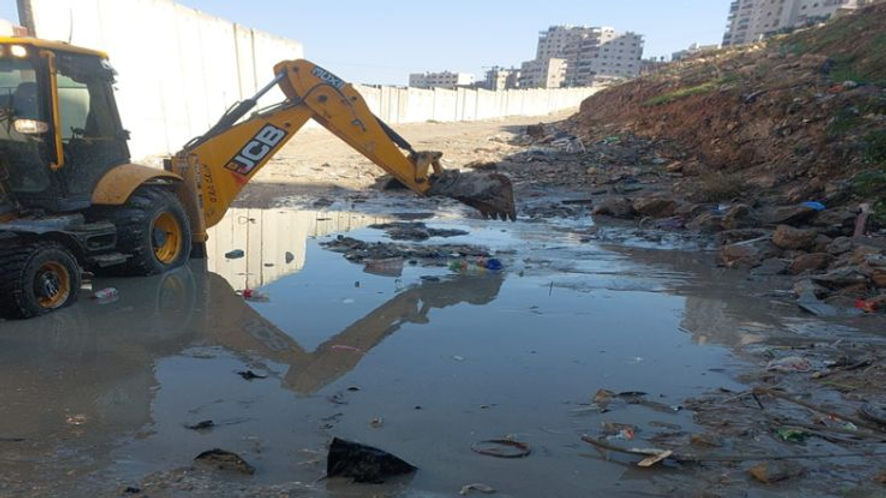
The Shuafat refugee camp is located within Jerusalem’s municipal boundaries. Sewage services in the neighborhood were previously provided by UNRWA, but following the 2024 law prohibiting UNRWA from providing services or conducting activities in Israeli territory, UNRWA’s operations in the neighborhood were gradually discontinued until they ceased entirely in March 2026. Since then, tens of thousands of residents have been left with an old and decaying sewage system, with no public body responsible for conducting regular maintenance.
This lack of sewage maintenance has created serious hazards: sewage flows in the streets and near homes, sewer pits are left open, the smells are unbearable, and recurring malfunctions cause flooding and damage to infrastructure. Residents are forced to pay for sewage pumping, clearing blockages, and urgent repairs, and at times must even carry out dangerous maintenance work themselves. Children have to pass sewage and sanitation hazards on their way to school and while walking through the neighborhood; older people, people with disabilities, and parents with strollers have difficulty navigating public spaces; and residents report worsening respiratory problems due to the strong odors and exposure to sewage hazards. Repeated appeals by residents to the Jerusalem Municipality and the Gihon Company have gone unanswered.
ACRI petitioned the Supreme Court on September 23, 2026, on behalf of four residents of the Shuafat refugee camp in Jerusalem and the NGO Ir Amim, against the Water and Sewage Authority, the Ministry of Jerusalem Affairs and Jewish Tradition, the Gihon Company, and the Jerusalem Municipality, demanding that they deal with the serious sewage problems and provide camp residents with regular and continuous public sewage services.
The fact that UNRWA provided sanitation services in the neighborhood for decades does not relieve the authorities of their obligation to take its place now that it is no longer operating, and the Gihon Company, the Jerusalem Municipality, and the Water Authority must act to ensure the provision of sewage services and to prevent health hazards stemming from sewage issues. The authorities’ refusal to provide residents of the neighborhood with essential sewage services contravenes their explicit legal obligations and infringes on the rights of tens of thousands of citizens and permanent residents to dignity, health, and basic living conditions.
Supreme Court 60039-09-26 S.T. v. Governmental Authority for Water and Sewage
Attorney: Tal Hassin
The petition, September 23, 2026 (Heb)
The appeal and petition were written with the assistance of ACRI legal intern Saly May


