Half a Village Without Water

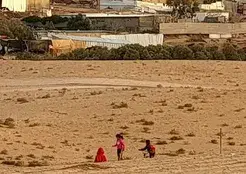
The village of Abu Qrenat in the Negev is a divided village. Part of it is recognized, and residents' homes are directly connected to local infrastructure, including water. The other part, which is home to 300-400 residents, is unrecognized and lacks basic infrastructure. In this section, the water supply is maintained by the residents themselves, who connect pipes to water meters located near the village, which are installed by the Negev Water Association.
On April 16, 2026, the unrecognized part of the village suddenly saw their water was cut off. This occurred with no prior warning, and when residents sought information from the local council officials, they were told that water pressure had been reduced due to concerns about water pipe bursts, and that they should wait patiently for a solution.
After three days without water, ACRI, together with the Regional Council for Unrecognized Villages, contacted the Government Water and Sewage Authority, the Neve Midbar Regional Council, and Mekorot Mei HaNegev. In the appeal, Yael Seidemann, ACRI’s Director of Public Inquiries, stressed the harm to residents' rights to health, dignity, and livelihood when they are forced to purchase bottled water for drinking and are unable to shower, use the toilet, clean their homes, or irrigate agricultural land. The water corporation has a legal obligation, in cases in which there is to be an interruption to the water supply that is anticipated to last for more than eight hours, to provide advance notice and to arrange for an alternative water supply. The regional council also bears responsibility to ensure that residents have access to water; moreover, when the water is cut off only for the unrecognized part of the village, it deepens the discrimination and neglect that already exists when it comes to the provision of basic infrastructure.
ACRI demanded the immediate restoration of a regular water supply to the residents, and, at minimum, the provision of a temporary solution to meet their basic needs, along with clear timelines for addressing the problem. A day after we sent our appeal, water was restored to all of the village's residents.
We thought the issue had been resolved, but on August 17, 2026, we were forced to again contact the Government Water and Sewerage Authority and the Neve Midbar Regional Council following two extended families, numbering more than 200 people and their livestock, receiving an irregular water supply and frequent disconnections. For three weeks, at the height of the summer heat, the water supply completely stopped from 3am until the afternoon, and during the time that the water did flow it was very weak and not enough to provide the families with even the most basic needs. Residents' appeals to the Regional Council were met with the claim that the source of the problem was a drop in water pressure and that it could not fix the problems causing it.
In ACRI's appeal, Attorney Seidemann again emphasized the right to water and the vital importance of a regular and available water supply, the violation of human rights and basic living conditions when that need is not met, and the responsibility of the Neve Midbar Regional Council for the provision of infrastructure and its regulation. We demanded that the Regional Council take immediate action to restore the water supply to the affected families.
Appeal from ACRI and the Council for Unrecognized Villages, April 19, 2026 (Heb)
ACRI's appeal, August 17, 2026 (Heb)